
A product sample is a chance to answer practical questions before committing to a bulk order. Does the cushion fit the intended seat? Can a first-time user adjust it easily? Are the product, instructions and packaging ready for the intended sales channel?
For distributors, retailers and private-label buyers, air seat cushion sample evaluation should produce a documented purchasing decision. A short, consistent review helps teams identify changes early and gives the supplier a clear reference for production approval.
Use the following checklist to organize your review. It is a suggested buyer workflow; project-specific test methods and acceptance criteria should be agreed with your supplier.
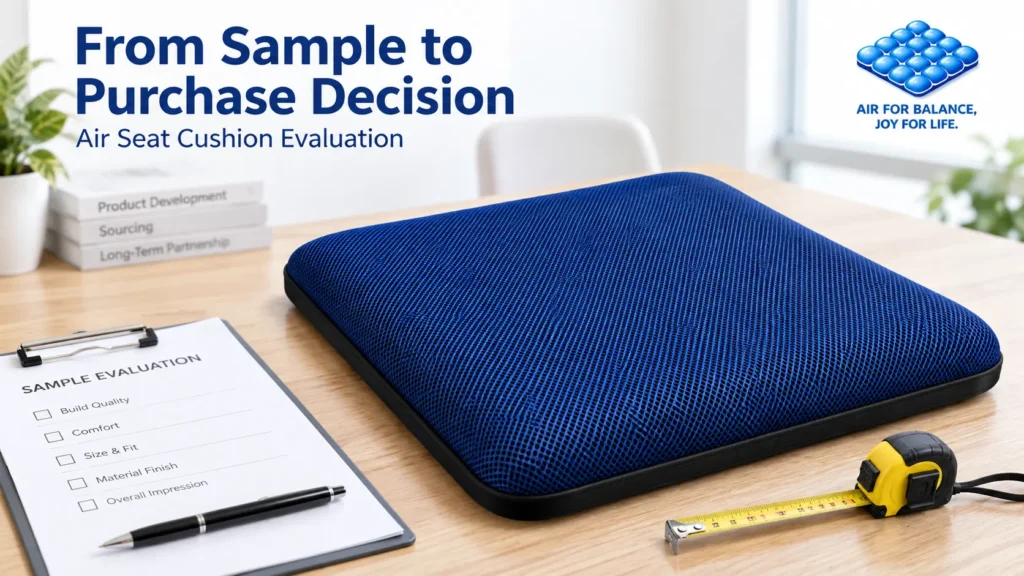
1. Define the Application Before Reviewing the Sample
Start by recording where the cushion will be used and who will use it. An office accessories retailer may prioritize chair fit and customer instructions. A promotional merchandise buyer may focus on artwork, presentation and packing dimensions.
Write down the intended seating environment, target customer, selected model and expected order quantity. Identify the people responsible for product evaluation, packaging approval and the final purchasing decision.
Give each sample a reference number and record its arrival date. Keep photographs of the product and packaging so feedback cannot be confused with another version.
2. Check Dimensions and Fit on Representative Seats
Compare the sample with the agreed specification sheet. Record its width, depth, weight and measurement conditions. For an inflatable product, describe the inflation state used when checking thickness so later comparisons are meaningful.
Place the cushion on the actual seating types planned for the program. Check whether it sits within the usable seat area and whether the front edge extends beyond the seat.
Evaluate the complete seating setup, including desk clearance or armrest height where relevant. A product that looks suitable on a display table still needs to be reviewed on its intended seat.
3. Evaluate Inflation and Air-Release Controls
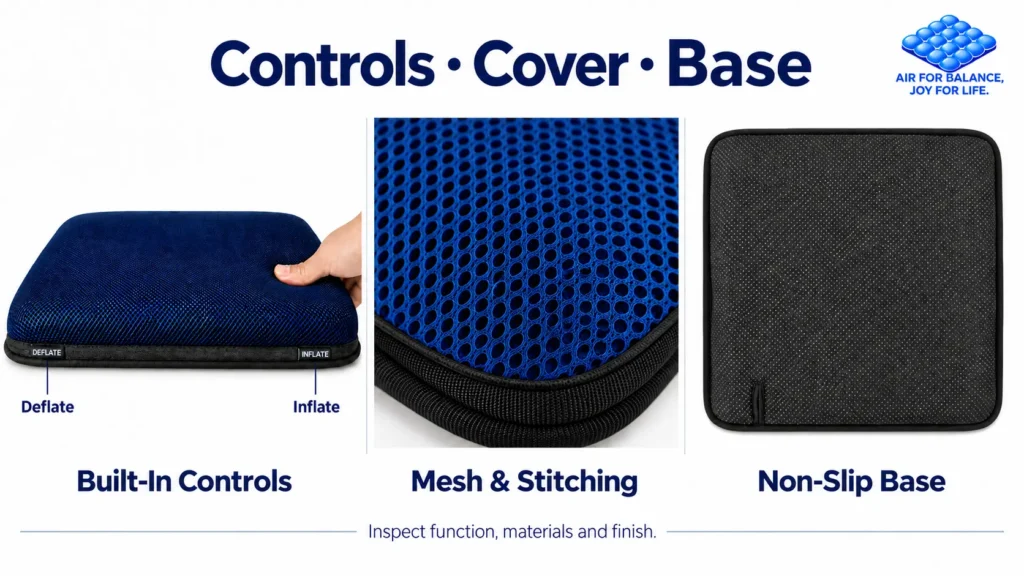
Ask a reviewer who has not used the product before to follow the supplied instructions. Observe whether they can find the controls and understand how to add or release air.
Check whether the user can make small adjustments and reach a preferred firmness without assistance. Record unclear labels, difficult access or missing illustrations as specific revision requests.
AJ AIR CUSHION’s current flagship construction uses 27 interconnected air cells and built-in press controls. Buyers can compare available designs and specifications on the Products page.
4. Separate Air-Retention Checks from Comfort Feedback
Air retention and perceived comfort are different evaluation topics. A reviewer describing the cushion as “softer” does not, by itself, establish a leak.
Agree on the starting inflation condition, load, observation period and measurement method before checking retention. Keep conditions consistent and document any change. If you need a numerical pass/fail threshold, establish it with the supplier before testing.
Record comfort feedback separately. Ask reviewers whether adjustment was straightforward, whether they preferred a different setting and whether they repeated the adjustment during use. This creates more useful feedback than a single overall rating.
5. Inspect the Cover, Seams and Base
Review the cover under consistent lighting. Look for uneven stitching, loose threads, misaligned panels and differences from the approved color or print reference.
For removable covers, follow the care instructions when checking removal and refitting. Confirm that the cover returns to its intended position and that controls remain accessible.
Check the base on representative seating surfaces during ordinary use. Record movement and the surface involved rather than assuming that one result applies to every chair material. Photograph any issue with a sample reference and a clear description.
6. Review Instructions and the Unboxing Experience
Open the package as a customer would. Confirm that the model, color, accessories and instructions match the packing list. Look for ambiguity in the steps for inflation, air release, positioning and care.
Ask someone outside the buying team to read the insert and demonstrate the setup. Their questions can reveal missing information that experienced reviewers overlook.
For branded projects, compare logo placement, artwork version and packaging copy against the approved files. Our private-label customization guide outlines the branding and packaging topics to discuss during development.
7. Turn Findings into an Approval Record
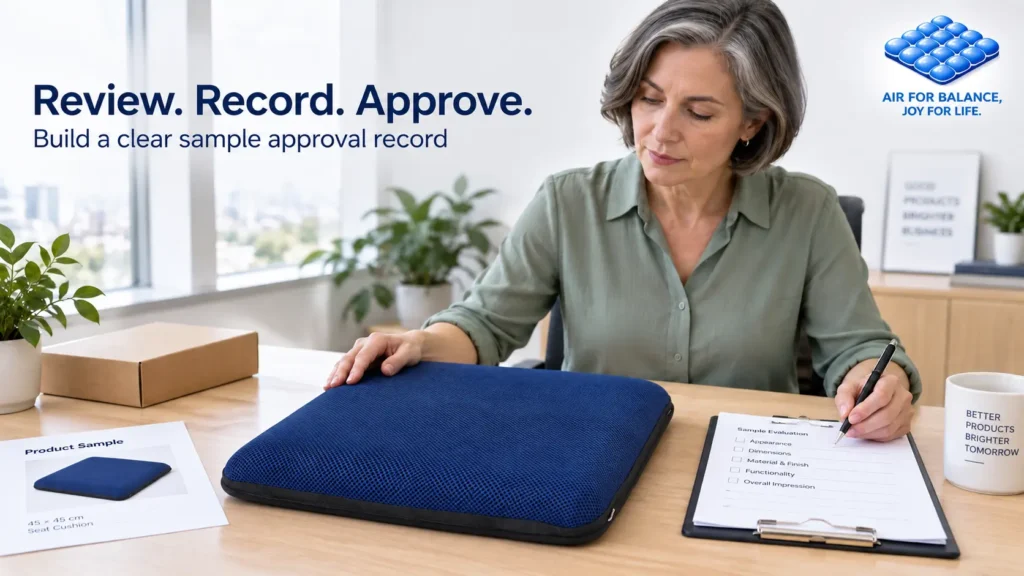
Use one shared record to keep the decision traceable:
| Review area | Evidence to retain | Decision |
|---|---|---|
| Dimensions and fit | Measurements and seat photographs | Accept / Revise / Retest |
| Inflation controls | Setup observations and instruction notes | Accept / Revise / Retest |
| Air retention | Agreed method, conditions and results | Accept / Revise / Retest |
| Cover and base | Detail photographs and surface observations | Accept / Revise / Retest |
| Packaging | Artwork version and packing checklist | Accept / Revise / Retest |
Assign an owner to every revision. Distinguish changes that need a new physical sample from copy corrections that can be reviewed digitally. Obtain written confirmation of the final specification and retain the approved reference sample where practical.
One satisfactory sample does not establish consistency across a production batch. Agree separately on production inspection requirements, reporting and how deviations from the approved reference will be handled.
Request an AJ AIR CUSHION Sample Review
To start a sample discussion, send your company details, target market, intended application, preferred model, estimated quantity and packaging requirements. Include any evaluation criteria your purchasing team needs to apply.
AJ’s standard product MOQ is 100 pieces per model. Sample preparation is estimated at approximately 7–10 days after specifications and applicable charges are confirmed. Sample and shipping charges apply according to the quotation; customized projects require individual confirmation. Review the B2B Partnership information for current commercial details.
A clear evaluation brief helps both teams understand what must be demonstrated before an order can move forward.
Request Samples & B2B Information
Email: support@ajaircushion.com