
Choosing fleet truck seat cushions starts with the vehicles and drivers already in your operation. A cushion that feels comfortable on a showroom chair may fit differently on a truck seat with side bolsters, an integrated belt or suspension adjustments. Before placing a volume order, establish which combinations of vehicle, seat and driver you intend to support.
For fleet procurement teams, a useful evaluation covers three questions: does the cushion fit the approved seating setup, can drivers adjust it correctly, and can the business manage it consistently? This guide turns those questions into a purchasing process, from the first sample to a phased rollout.
Build a Seat Inventory Before Comparing Products
Group vehicles by their actual seats rather than truck brand alone. The same truck model may have different seat options or replacement seats installed over its service life. Record the seat manufacturer and model where available, seat condition, usable cushion area and relevant operating instructions.
Include the people who will use the product. Assigned trucks, rotating drivers and sleeper-cab operations create different ownership and handover needs. Ask whether cushions will belong to individual drivers or remain with approved vehicles. That decision affects labeling, cleaning and responsibility for reporting damage.
Separate existing seat problems from accessory requests. Torn upholstery, defective adjustments or a worn suspension should enter the maintenance process. A new cushion should not be used to conceal an unresolved seat defect.
Review Cab Fit With the Truck Safely Parked
Before an operational trial, review the vehicle and seat manufacturer’s instructions concerning added accessories. Where compatibility is unclear, seek confirmation through the appropriate manufacturer, dealer or fleet technical contact. Record the response against the specific seat configuration.
During a stationary fitting, check whether the cushion rests within the usable seat area. Evaluate the driver’s relationship to pedals, steering wheel, backrest and mirrors after normal seat adjustment. Confirm that belt routing, buckles, controls and any relevant sensing features remain unobstructed.
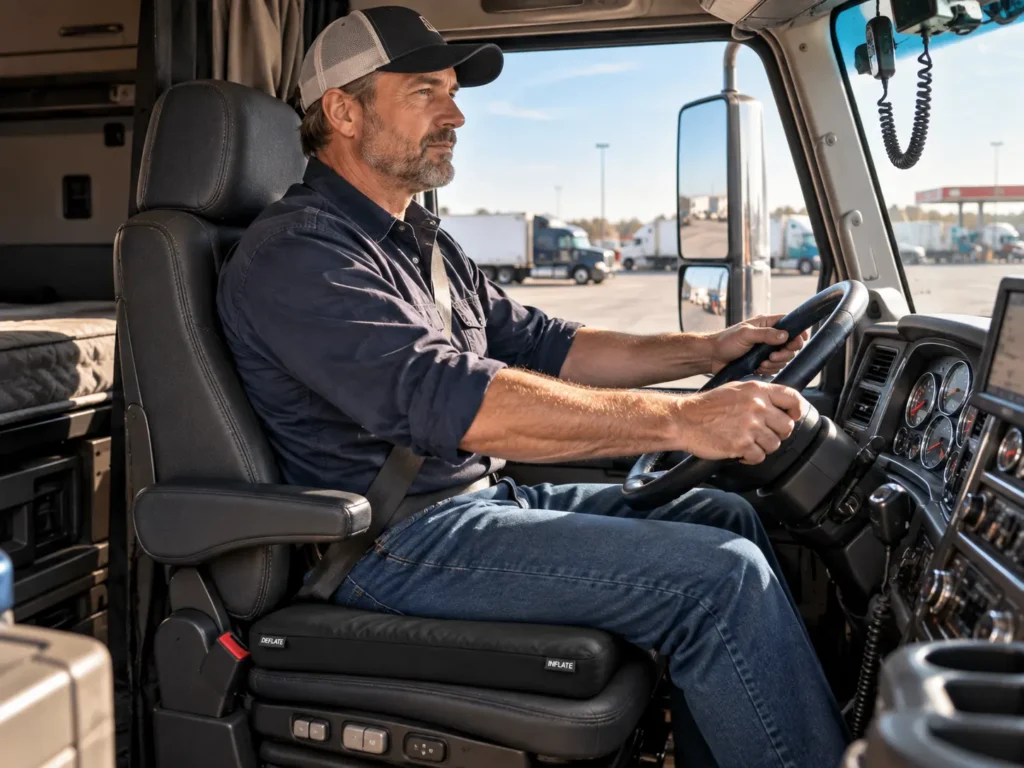
Do not assume that a nominal cushion thickness equals the increase in occupied seating height. Inflation, the original seat and the user affect the final position. Make the assessment with the intended user seated, and keep a record of the setup that was reviewed.
Treat Adjustable Firmness as a Usability Question
An adjustable cushion gives drivers another setting to manage. Procurement should therefore evaluate instruction quality as carefully as the adjustment feature itself. Can a first-time user identify the controls, follow the supplied directions and describe a comfortable setting?
Complete setup while safely parked. Drivers should not reach for cushion controls while driving. If a setting needs attention during a trip, it should wait until the vehicle is safely stopped under the fleet’s operating procedures.
Keep personal preference separate from a defect report. A driver preferring less air does not establish that the product is faulty. Unexpected changes should be documented using the agreed sample evaluation method, rather than diagnosed from one comfort comment.
Run a Pilot That Represents the Fleet
Select a manageable group covering the seat types and operating patterns you actually intend to include. Define the trial period, review contacts and stop conditions before distributing samples. There is no universal pilot size that makes a product suitable for every fleet.
Collect a baseline description of the existing seating setup, then use the same feedback questions during the trial. Record relevant changes, such as a different vehicle, repaired seat or altered route. These details help avoid attributing every change in driver experience to the cushion.
| Review area | Record | Purchasing response |
|---|---|---|
| Cab compatibility | Vehicle, seat and stationary fit review | Approve only the reviewed configuration |
| Setup usability | Instruction questions and adjustment difficulties | Improve onboarding or reassess suitability |
| Driver experience | Comfort preference and position changes | Compare individual feedback, not just an average |
| Product condition | Cover, seams, base and air-control observations | Request clarification or further evaluation |
| Operational ownership | Storage, cleaning and reporting responsibility | Include the process in rollout planning |
Keep the review simple enough for drivers to complete. A short, repeatable record is more useful than a lengthy questionnaire that returns incomplete answers.
For shared warehouse equipment, see our forklift seat cushion buying guide for shift handover and care planning.
Distinguish Comfort Feedback From Vibration Evidence
A report of improved sitting comfort is not a measurement of vibration attenuation. The UK Health and Safety Executive’s whole-body vibration guidance addresses vehicles, seats, maintenance and working conditions as parts of a wider control approach.
If vibration performance is a procurement requirement, request relevant evidence for the specific product and seating configuration. Do not infer it from the presence of air cells, an adjustable setting or a positive driver review. Fleet health, safety and engineering requirements need their own evaluation.
Compare Program Costs Beyond Unit Price
Request a quotation identifying the model, quantity, packaging, delivery terms and any agreed branding. Include the time needed for fitting, instruction and ongoing handling when comparing proposals. An inexpensive item can still create avoidable work if ownership and care procedures are unclear.
Ask how product questions and reported defects will be documented and reviewed. Confirm any spare-cover availability, replacement arrangements and commercial terms in writing rather than assuming they are included. Retain the approved sample and specification version as the purchasing reference.
Prepare a Fleet-Specific Sample Request
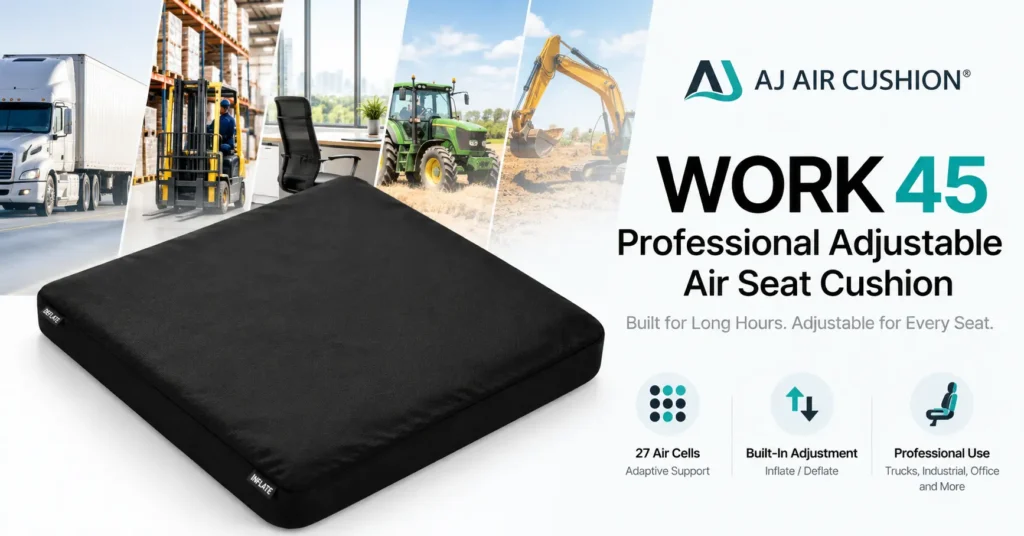
AJ AIR CUSHION Work 45 offers adjustable air support with integrated controls and a black polyester cover. Evaluate a sample against your fleet’s documented requirements before deciding on deployment.
Use our sample evaluation checklist to organize findings. Then request B2B information with truck and seat details, intended users, estimated quantity and delivery requirements. A defined application helps turn general interest into a useful purchasing discussion.