
Private label seat cushions can give distributors, retailers, fleet suppliers and corporate merchandise programs a practical way to add a differentiated comfort product to their assortment. However, a successful program involves more than placing a logo on an existing cushion. Buyers need to align the product platform, branding method, packaging, approval process and order quantity before production begins.
This guide explains the main decisions involved in sourcing custom air seat cushions and shows how to prepare a clearer request for quotation.
What Does “Private Label” Mean for Seat Cushions?
In a private-label program, a supplier produces a product that is sold under the buyer’s brand or a program-specific identity. The level of customization can range from a branded label and retail box to coordinated colors, printed inserts and product specifications.
Private label is different from a fully custom product-development project. A buyer may start with an established cushion platform and customize selected elements, while a deeper OEM or ODM program can involve changes to materials, dimensions, construction or performance requirements. Starting with the right scope helps control cost, tooling requirements and lead time.
For many first programs, an established product platform with controlled branding changes is the most practical route. It lets the buyer evaluate market response while keeping the approval process manageable.
Start With the Product Platform, Not the Logo
Branding works only when the underlying product fits the intended user and sales channel. Before discussing artwork, buyers should review the cushion’s dimensions, weight, cover material, base, adjustment method and everyday handling.
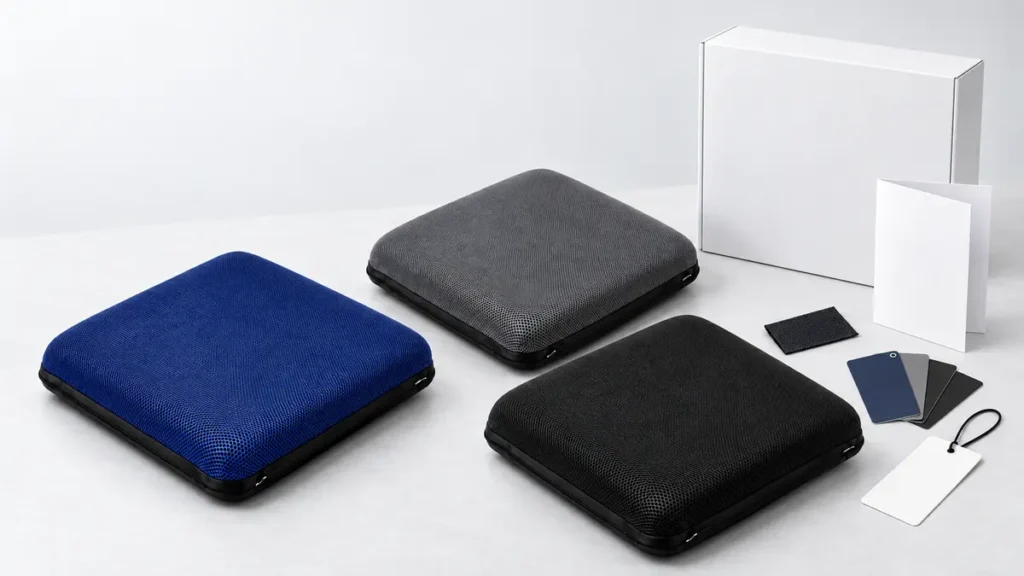
AJ AIR CUSHION’s flagship model uses 27 interconnected air cells, a concealed built-in press control for firmness adjustment, a breathable removable 3D mesh cover and a non-slip base. The standard size is approximately 45 × 45 × 5 cm, with a weight of about 0.4 kg. Standard color options include Midnight Black, Navy Blue and Slate Gray.
These details affect shelf presentation, shipping cartons, storage, product photography and end-user instructions. Buyers can review the current air seat cushion product range before defining a private-label brief.
Choose the Right Customization Elements
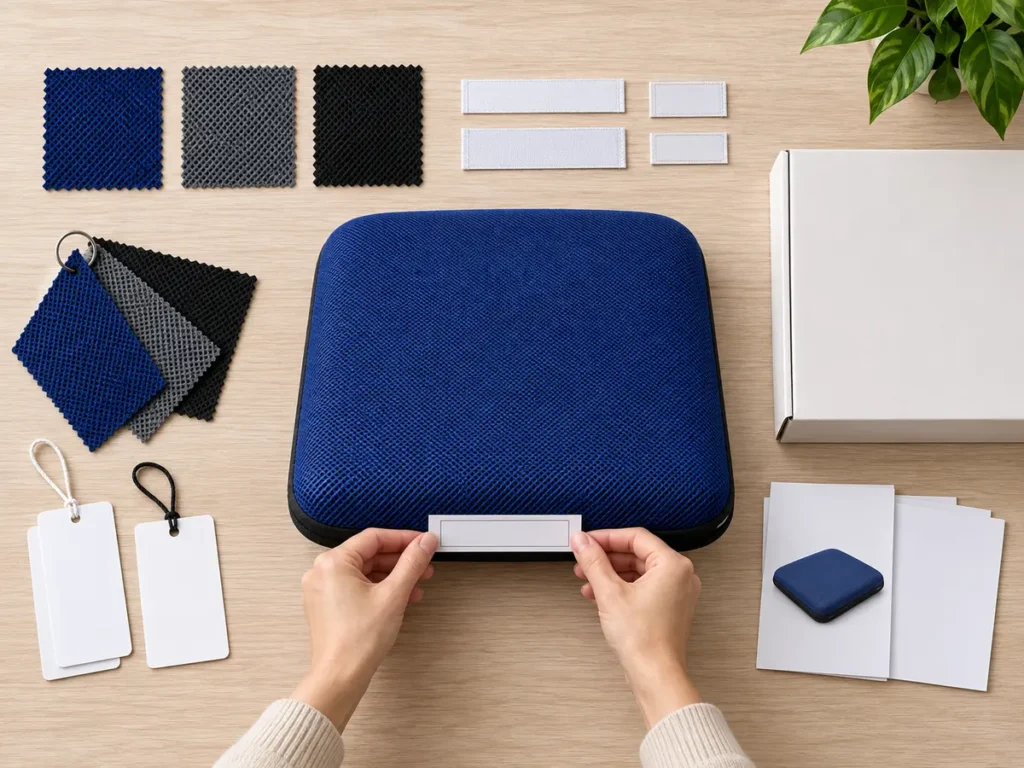
A private-label brief can coordinate product color, logo placement, labels, packaging and printed inserts.
Logo Placement
Possible branding methods may include a woven label, printed label, packaging artwork or a branded insert. The best method depends on logo complexity, required size, fabric compatibility and expected wear. Ask the supplier for the recommended artwork format, color references, printable area and a visual mockup before approving production.
Avoid choosing placement from a flat drawing alone. The logo should remain visible without interfering with the mesh surface, adjustment controls, zipper or seating area.
Colors and Patterns
Standard colors usually provide the simplest starting point for a test order. Custom colors or patterns may require additional material sourcing, color matching and higher quantities. Buyers should provide Pantone or other recognized color references, then approve a physical swatch when color accuracy is important.
Packaging, Labels and Inserts
Packaging needs vary by channel. A retail program may require a printed box, barcode area and shelf-ready product information. A corporate gifting program may prioritize a clean presentation and a branded message card. Fleet or distributor orders may use simpler bulk packaging.
Confirm the required packaging dimensions, carton quantity, country-of-origin marking, care instructions, barcode format, warning text and language versions early. These items can affect both unit cost and production scheduling.
Use a Sample Approval Checklist
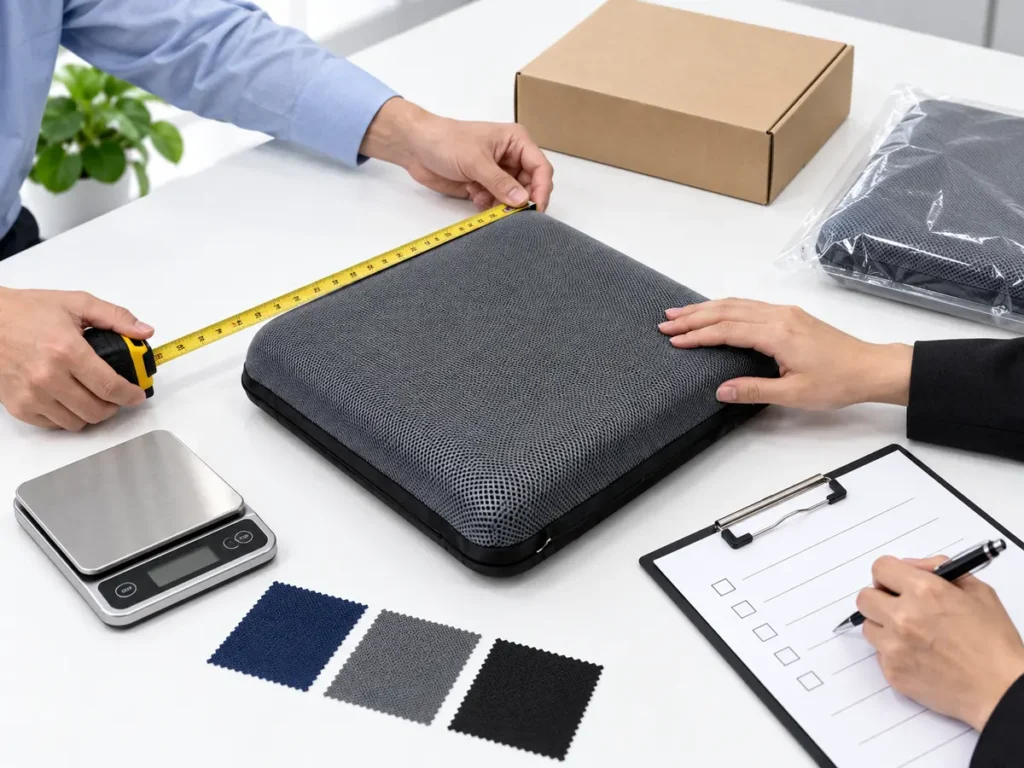
A physical sample helps buyers verify dimensions, materials, color, branding and packaging before bulk production.
A sample should be evaluated against a written checklist rather than general appearance alone. Review:
- Product dimensions and weight
- Cover color, mesh texture and stitching
- Non-slip base and overall stability
- Built-in adjustment function
- Logo size, position and color
- Label content and placement
- Packaging construction and insert layout
- Master-carton and shipping requirements
Photographs and comments should identify each requested change clearly. After revisions, both parties should confirm which sample, artwork file and specification sheet represent the final approved version.
AJ’s typical sample lead time is approximately 7–10 days, depending on the requested customization. Sample and shipping charges should be confirmed in the quotation, including whether an agreed sample charge may be credited against a later qualifying order.
Understand MOQ, Pricing and Production Timing
The standard minimum order quantity is 100 pieces per model. The exact quotation depends on the model, quantity, materials, logo method, packaging and delivery terms. Custom colors, patterns or structural changes may have different minimums.
Bulk production is typically approximately 30 days after final approval, subject to the confirmed specification, material availability and production schedule. Payment is normally arranged by T/T under the terms stated in the quotation.
For a useful comparison between suppliers, request an itemized quotation that separates the product, customization, packaging, sample, tooling if applicable, freight and any one-time setup costs. Buyers who are still defining their sourcing process can also read How to Choose an OEM Air Seat Cushion Manufacturer and the guide to wholesale MOQ, samples and lead times.
Review Documentation for the Intended Market
Documentation requirements depend on the product model, materials, sales channel and destination market. Ask what product specifications, material information, test reports, patent references and packaging declarations are available for review. Do not assume that one document applies to every model or market.
AJ maintains a Technology & Patents page that presents its air-cell and adjustment platform. Additional documentation can be discussed with qualified B2B buyers according to the proposed model and market.
Prepare a Better Private-Label RFQ
Before contacting a supplier, prepare the following information:
- Target market and sales channel
- Estimated order quantity and repeat-order potential
- Preferred model, dimensions and color
- Logo file and desired branding method
- Packaging and barcode requirements
- Required delivery location and target date
- Documentation or testing requirements
- Sample quantity and approval contacts
A complete brief helps the supplier identify feasibility, cost drivers and lead-time risks earlier. It also reduces revision cycles between sample approval and bulk production.
Discuss Your Private-Label Seat Cushion Program
AJ AIR CUSHION supports wholesale, OEM, ODM and private-label discussions for distributors, retailers, fleet programs, corporate buyers and promotional-product partners. Available options may include logo applications, colors, patterns, packaging, labels and inserts, subject to the approved model and order requirements.
Submit your B2B requirements to request product specifications, wholesale pricing and a sample quotation. Please include your market, estimated quantity and preferred customization so the team can provide a more relevant response.
Product information is provided for general comfort and sourcing purposes. Seat cushions are not a substitute for medical care, workplace assessment or professional ergonomic advice.