
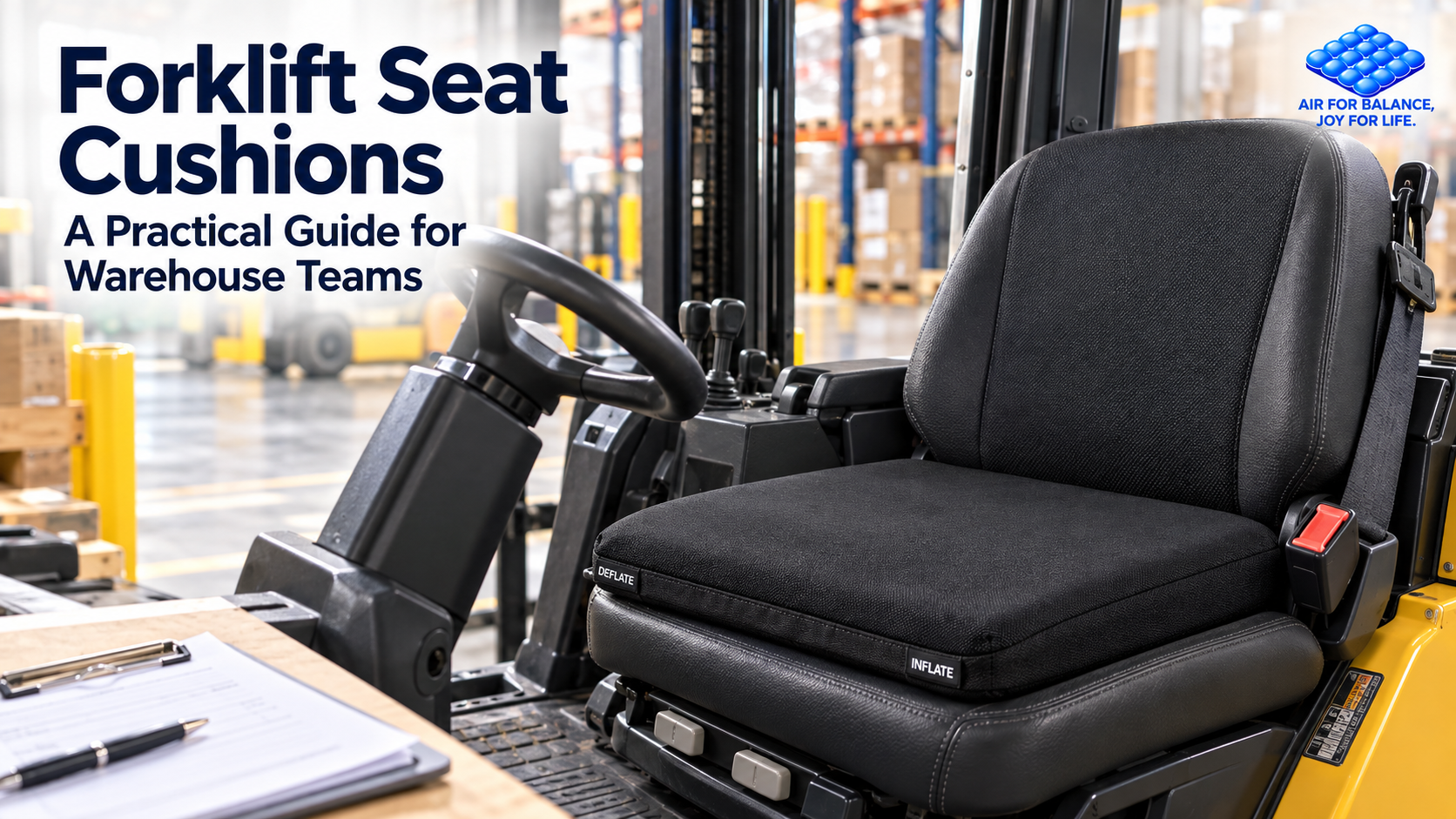
Choosing forklift seat cushions requires more than comparing dimensions and price. Warehouse teams need to consider the installed seat, operator access, equipment instructions and the way vehicles are shared across shifts. A product that works on an office chair does not automatically suit a sit-down forklift.
In our fleet truck seat cushion purchasing guide, we introduced a process built around fit, user feedback and documented approval. Warehouse operations add another challenge: the next operator may need a different setup. This guide explains how to evaluate samples and create a manageable handover process before buying in volume.
Start With the Equipment and Seat Configuration
List the vehicles being considered, including the truck model, installed seat and any replacement seat history. Separate sit-down forklifts from stand-up equipment. A seat cushion evaluation applies only to equipment with an appropriate seated operating position.
Record the usable seating area, bolsters, adjustments, restraint arrangement and relevant switches or sensors. Note existing defects separately. Damaged upholstery, worn suspension or an unreliable seat adjustment belongs in the maintenance process before accessory selection.
Review the equipment and seat manufacturer’s instructions concerning added accessories. If compatibility is unclear, seek guidance from the manufacturer, dealer or appropriate technical contact. A similar appearance or matching nominal size is not sufficient evidence of suitability.
Check Fit Before an Operational Trial
Complete the initial fitting with the equipment safely parked and secured under site procedures. Include the operator and the personnel responsible for equipment safety or maintenance. Keep the reviewed vehicle-and-seat combination in the sample record.
Assess whether the cushion rests within the intended seating area without obstructing restraints, buckles, controls or access points. With the intended operator seated, check reach to pedals and controls, backrest contact, visibility and available clearance. Confirm that any operator-presence system works as intended through an appropriate technical review; never bypass it to accommodate an accessory.
Nominal cushion thickness does not establish the final occupied seating height. Inflation, the original seat and the operator affect the result. If the setup creates interference or uncertainty, stop the trial and resolve the issue before use.
Make Adjustment Practical for Shared Shifts
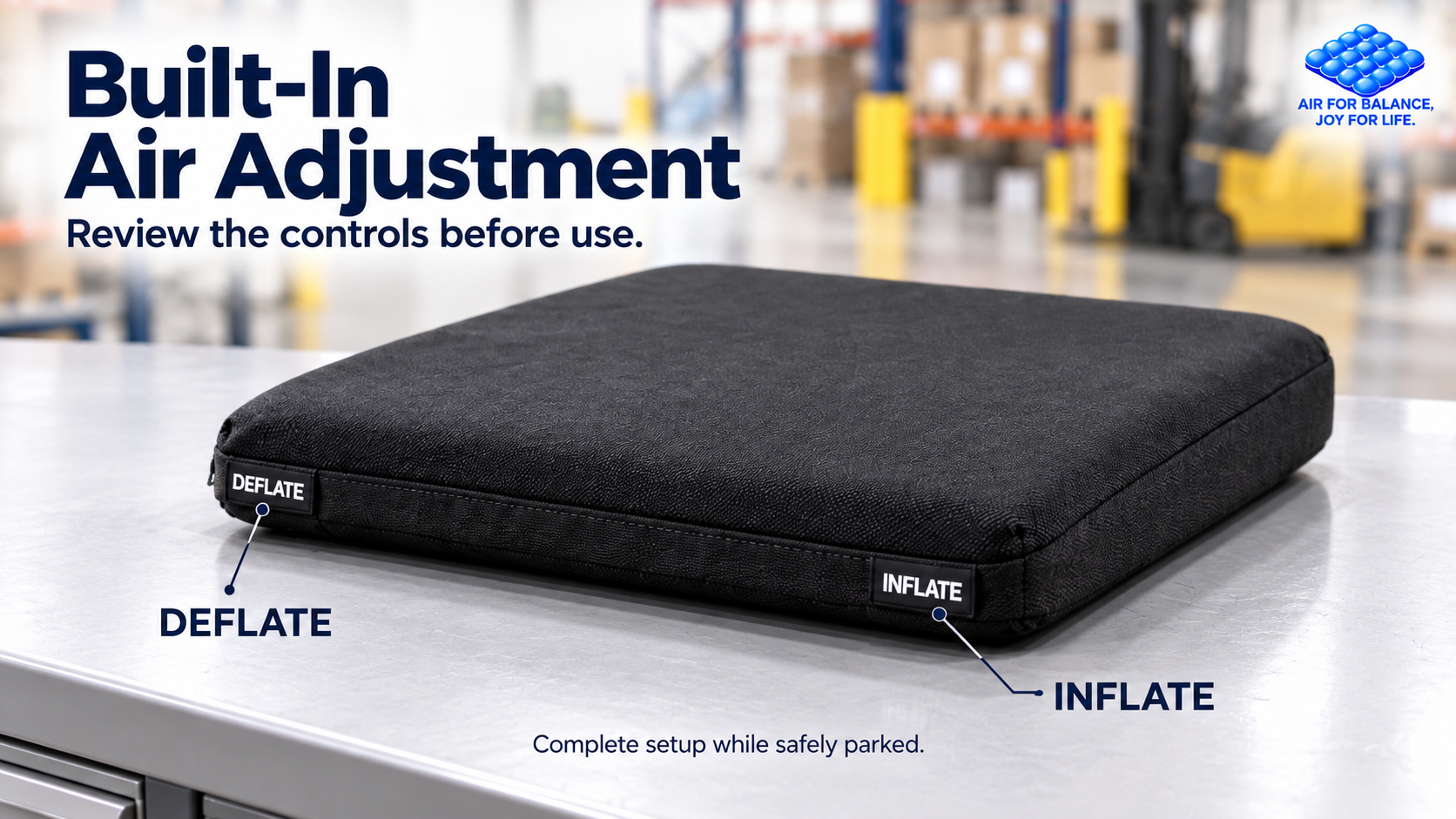
An adjustable air cushion introduces another setting into an already adjustable workstation. Evaluate whether operators can identify the inflate and deflate controls, follow the supplied directions and reach a suitable setting without prolonged assistance.
All adjustments should happen while safely parked. The cushion setup should be part of the operator’s preparation, with instructions available where the site normally keeps operating information. Do not assume that the previous operator’s preferred setting will suit the next person.
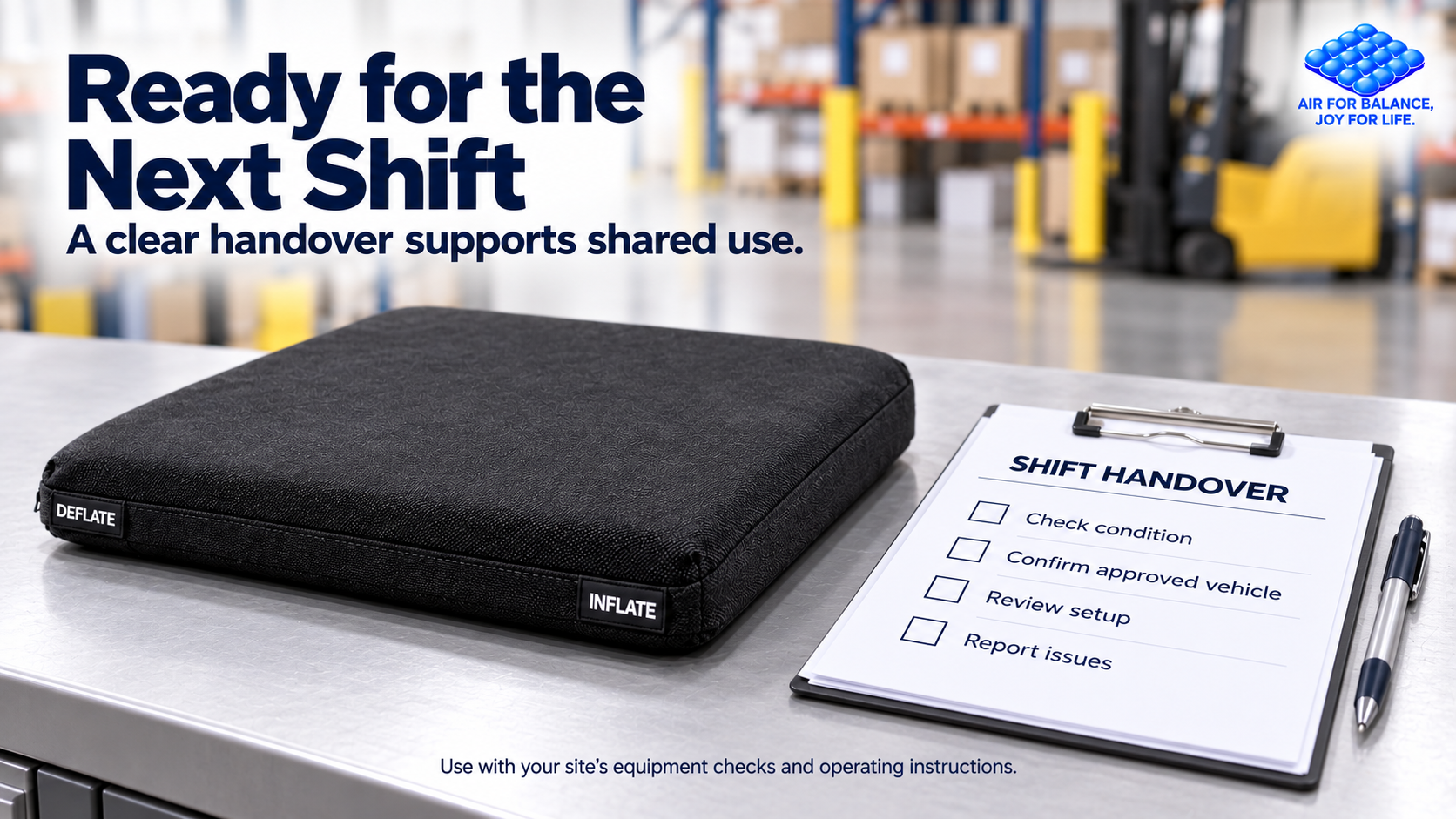
Decide whether cushions will stay with approved vehicles or belong to individual operators. Vehicle-assigned cushions simplify location tracking but require a clear handover routine. Individually assigned cushions need storage and a way to prevent use on an unreviewed vehicle. Label the approved application and responsible contact.
Define Cleaning and Storage Before Ordering
Ask for care instructions covering the cover, air bladder, controls and base separately. Confirm whether the cover is removable, which cleaning methods are permitted and how components must dry before reassembly. Do not infer disinfectant compatibility, waterproofing or antibacterial performance from the fabric description.
Discuss actual warehouse conditions: dust, moisture, shared use and storage space may affect handling requirements. Establish who cleans the cushion, where it is kept during cleaning and how a damaged or questionable unit is removed from use. Request information about replacement covers and spare components rather than assuming availability.
Use a Sample Trial With Clear Decision Criteria
Choose operators and equipment configurations that represent the intended application. Define the trial period, review contacts and stop conditions before distributing samples. An unresolved fit issue should not be averaged away by positive comfort ratings from other users.
Use a short record that supervisors can review consistently:
| Evaluation area | What to record | Decision to make |
|---|---|---|
| Equipment compatibility | Truck, seat, technical guidance and stationary fit findings | Whether this specific configuration can proceed |
| Adjustment usability | Instruction questions, setup time and control identification | Whether onboarding needs improvement |
| Operator feedback | Comfort preference, reach and position observations | Whether the setup remains suitable for each user |
| Shift handover | Ownership, setting changes and inspection responsibility | Whether the process works across shifts |
| Cleaning and condition | Care method, drying, seams, base and control observations | Whether routine handling is manageable |
| Commercial readiness | Approved sample, specification, quantity and support terms | Whether to proceed with a defined purchasing scope |
Collect feedback against the same questions throughout the trial. Record changes in vehicle, seat maintenance or work assignment that could affect the experience. Keep the approved sample and specification version as the reference for subsequent orders.
Keep Comfort Feedback Separate From Vibration Evidence
A report that a cushion feels more comfortable does not demonstrate reduced whole-body vibration. The UK Health and Safety Executive’s vibration control guidance addresses vehicle selection, seats, tyres, maintenance and ground conditions within a broader control approach.
For warehouse buyers, this means a comfort trial should remain separate from any vibration-performance assessment. If attenuation is a purchasing requirement, request evidence relevant to the particular cushion, seat and equipment configuration. Do not infer performance from air cells or adjustable firmness.
OSHA’s forklift operating guidance also emphasizes preparation, inspection and maintenance. Cushion procurement should fit within the site’s established equipment procedures.
Prepare a Warehouse-Specific Sample Request
AJ AIR CUSHION Work 45 uses a black polyester cover, 27 interconnected air cells and built-in inflate/deflate controls. Its nominal dimensions are 45 × 45 × 5 cm. These details provide a starting specification for evaluation; they do not establish compatibility with every forklift seat.
Send the equipment and seat details, shift arrangement, intended users and estimated quantity with your inquiry. Use our B2B sample evaluation checklist to organize observations, then contact AJ AIR CUSHION to discuss samples and commercial requirements. A documented application helps both parties decide what needs to be reviewed before a volume order.